

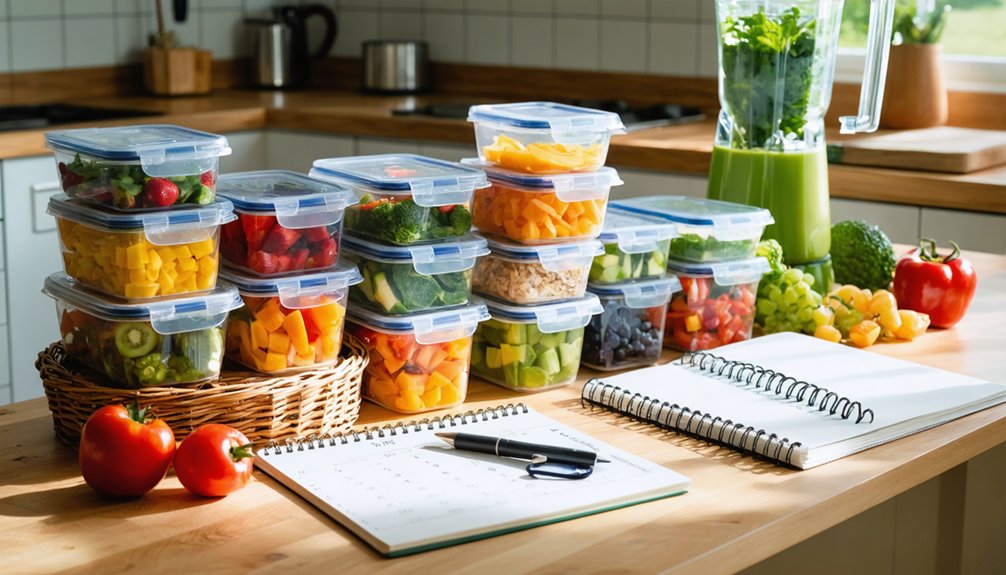

Eating healthy on a busy schedule requires effective meal planning and preparation. Designate days for planning and batch cook to minimize daily cooking time. Accept easy recipes and maintain an organized grocery list to make shopping efficient. Opt for portable snacks and utilize leftovers to create quick meals. Staying hydrated is vital, as is understanding nutrition labels for informed choices. Involving family in meal prep promotes teamwork. Uncover additional strategies that can further streamline healthy eating.
Highlights
- Plan meals weekly to maximize grocery store discounts and keep healthy choices on hand amid a busy schedule.
- Batch cook meals ahead of time, reducing preparation stress and eliminating decision fatigue during busy weekdays.
- Keep portable, healthy snacks ready for on-the-go eating, focusing on high-protein and high-fiber options.
- Utilize meal delivery services or pre-portioned kits to save time on shopping and simplify meal prep.
- Leverage leftovers creatively in new dishes, reducing waste while maximizing nutritional value throughout the week.
Prioritize Meal Planning
Meal planning serves as a foundational strategy for individuals traversing the challenges of a busy schedule. With 57.9% of young adults facing time constraints that impact food choices, prioritizing meal preparation becomes essential. Designating specific days for planning—such as Sunday or Monday—cultivates routine and strengthens time management skills. Remarkably, 70% of those who implement meal plans find adherence easier, reducing spontaneous unhealthy eating patterns. Moreover, planning meals allows individuals to leverage grocery store discounts effectively, contributing to financial savings. Additionally, creating a weekly menu around discounted items maximizes not only savings but also the efficiency of the grocery shopping process. Furthermore, having planned meals ready can help avoid the temptation of eating out, making it easier to maintain healthy eating habits. Ultimately, meal prep can significantly reduce stress by eliminating last-minute decisions about what to eat. Notably, home-prepared meals are associated with lower rates of obesity and higher intakes of fruits and vegetables, underscoring the health benefits of putting time into meal planning. Evidence suggests that meal planning is also linked with a healthier diet and less obesity, highlighting its potential impact on overall well-being.
Batch Cooking for Time Efficiency
While traversing a busy lifestyle, individuals often seek efficient solutions to maintain healthy eating habits, and batch cooking emerges as a powerful strategy. By dedicating a single cooking session to meal prep, individuals can create multiple meals in the time it typically takes to prepare just one. Research indicates that this approach not only reduces daily cooking frequency but also eliminates the stress of deciding what to eat. Batch cooking allows for simultaneous preparation of ingredients, minimizing cleanup and maximizing kitchen efficiency. Batch cooking allows households to save on food costs by planning meals and avoiding random purchases. Additionally, this method helps to reduce food waste by using up ingredients before they expire. By investing time upfront, individuals can enjoy cumulative time savings throughout the week, converting meal preparation into a manageable task. Moreover, preparing meals with whole food plant-based ingredients further enhances nutritional value and health benefits. This method promotes a sustainable routine that cultivates healthy choices without a daily time commitment.
Opt for Easy and Quick Recipes
Busy individuals can substantially benefit from choosing easy and quick recipes that require minimal preparation and cooking time. Crockpot meals, specifically “dump dinners,” offer a perfect solution—ingredients are simply combined in a slow cooker, requiring little more than initial setup. By designating specific days, such as “Crockpot Tuesday,” planners can streamline meal preparation and alleviate decision fatigue. These recipes not only cook unattended, allowing for hours of hands-off time, but also markedly reduce clean-up through single-container methods. Utilizing pre-prepped freezer meals makes dinner even easier, with options moving directly from freezer to slow cooker. Additionally, keeping an inventory of freezer meals helps with meal planning by allowing you to quickly choose what to make. Furthermore, preparing on-the-go meals helps ensure that you have healthy options ready for busy nights when schedules seem overwhelming. Importantly, spending more time on food preparation at home can lead to healthier eating habits, reinforcing the value of these efficient cooking strategies.
Smart Grocery Shopping Tips
Effective grocery shopping is essential for maintaining a healthy diet, especially for those with demanding schedules. To enhance healthy shopping, preparation of a strategic grocery list is crucial. By inventorying existing pantry items and organizing lists by store sections, shoppers can efficiently prioritize nutrient-dense foods from the five food groups. Maneuvering the perimeter of the store first guarantees access to fresh produce and proteins. Additionally, studies show that the type of food store where groceries are purchased can significantly impact the overall healthfulness of food selections.
Furthermore, many consumers are reducing fast food intake and instead striving to make healthier meals at home, making it vital to choose ingredients that support this goal.
For ideal grocery budgeting, choosing store brands and seasonal items can reduce costs while preserving nutritional value. Additionally, shopping while full minimizes impulse buys. Utilizing coupons and loyalty programs maximizes savings, allowing individuals to focus on healthier eating options without financial strain.
These smart shopping practices promote a sense of community and collective well-being, and proper planning can guarantee that healthy eating remains an essential part of daily life, making it crucial.
Embrace Portable Snack Options
Portable snacks have emerged as a vital solution for those traversing hectic lifestyles. With the global healthy snacks market projected to grow substantially, consumers are increasingly seeking nutritious, on-the-go options. Canned snacks, jerky, and organic freeze-dried fruits are gaining popularity due to their convenience and health benefits. Younger generations, particularly Gen Z and Millennials, often choose these healthy munchies for energy boosts throughout their busy days. Many prioritize protein, fiber, and minimal sugar in their snack selections. In fact, a substantial share of consumers seeks crunchy textures in portable formats, making pleasant options like dehydrated vegetable chips and sea vegetable snacks essential for any lively individual. As 15% of consumers in the US and Canada snack while traveling or on-the-go, embracing portable snacks allows everyone to maintain their health goals, even on the run, and receive an energizing lift. The global healthy snacks market size in 2023 is USD 37.36 Billion, ensuring that consumers have access to diverse and appealing choices that fit their busy lifestyles. The rise of healthy snacks like Brami Snacking Lupini Beans ensures that consumers have access to diverse and appealing choices that fit their busy lifestyles. Continuous innovation in the healthy snacks market ensures that consumers have access to diverse and appealing choices that fit their busy lifestyles.
Utilize Healthy Meal Delivery Services
Healthy meal delivery services have become an appealing solution for individuals juggling demanding schedules. As the market for meal kits grows rapidly, projected revenues are set to reach $18.47 billion by 2027. Approximately 17% of American consumers have tried these services, with 90% recommending them to others.
Meal delivery not only saves time on planning and shopping but also simplifies meal preparation, reducing decision fatigue. With pre-portioned ingredients, users often increase their intake of fruits and vegetables, promoting healthier eating habits. The convenience of diverse, nutrient-rich options encourages exploration of new cuisines. Additionally, by focusing on balanced nutrition, these services help customers meet specific dietary goals, further enhancing their health journey. Recently, the global healthy meal delivery service market has shown significant growth, reflecting the increasing demand for convenient and nutritious dining options. Meal kits appear to be a healthier alternative to traditional catered meals, offering greater transparency regarding ingredient freshness. Despite some cost concerns, the time efficiency and nutritional benefits make meal kits an attractive choice for health-conscious individuals pursuing to maintain a balanced diet amidst busy lives and ready to take a plunge into a better lifestyle, supporting a culture that nurtures growth.
Leverage Leftovers for Quick Meals
With the demands of a busy lifestyle, leveraging leftovers can serve as a practical strategy for creating quick, nutritious meals. Food recycling through creative meal prep not only reduces waste but maximizes flavor.
For instance, leftover proteins, such as tuna steaks, can be converted into high-protein wraps or invigorating salads with Greek yogurt. Repurposing veggies into bubble and squeak or topping pizzas with roasted vegetables brings new life to untouched sides. Moreover, incorporating cooled leftover rice increases resistant starch, promoting better blood sugar management.
Stay Hydrated Throughout the Day
Maintaining proper hydration throughout the day is essential for overall well-being, especially for those juggling busy schedules.
Hydration tips for busy individuals include keeping a water bottle at their workspace to encourage regular sipping and setting hourly alerts for hydration breaks.
The National Academy of Medicine recommends daily fluid intake of 13 cups for men and 9 cups for women, which includes hydration from food sources.
To guarantee adequate fluid intake, starting the day with a full glass of water and consuming fluids with meals can be effective strategies.
Monitoring urine color is a practical indicator of hydration, with clear to pale yellow urine signifying proper levels.
Staying aware of personal hydration needs can greatly enhance daily health and energy, and to guarantee proper hydration, making notes or notifications can serve as helpful cues.
Make Nutrition Labels Your Friend
Busy individuals often overlook the importance of nutrition labels when making food choices amidst their hectic schedules. However, acquiring label literacy can substantially enhance dietary habits.
Nutrition basics, such as understanding serving sizes, calories, and percent Daily Value (%DV), enable consumers to make informed decisions quickly. Nearly two-thirds of people rely on Nutrition Facts panels, with updated labels highlighting added sugars and more accurate serving sizes. By recognizing that a %DV of 5% or less indicates low nutrients and 20% or more indicates high, busy shoppers can swiftly compare products.
Utilizing nutrition labels helps avoid excess sodium and saturated fat, and encourages healthier choices, promoting a sense of community around better eating habits. Accept nutrition labels as allies in a busy lifestyle.
Involve the Whole Family in Healthy Eating
Family involvement in healthy eating substantially improves dietary habits and strengthens emotional bonds. Regular family meals promote nutrient-rich diets and maintain healthy weights, as children sharing three or more meals weekly demonstrate. Parent guidance plays a vital role; when parents encourage fruit and vegetable consumption, children are likely to adopt these healthy habits.
Designing specific meal preparation roles engages every family member, promoting teamwork and shared responsibility. Additionally, integrating simple cooking tasks allows children to learn about nutrition hands-on. Ultimately, consistent family meal traditions not only enhance nutritional quality but also build emotional resilience, especially during busy times. By prioritizing family involvement, families can collectively enhance their health and nurture a sense of belonging.
References
- https://workplaceinsight.net/workplace-stress-and-busy-schedules-are-biggest-barriers-to-a-healthy-lifestyle-claims-report/
- https://pmc.ncbi.nlm.nih.gov/articles/PMC3464955/
- https://spondylitis.org/lifecafe/guide-to-healthy-habits-for-a-work-life-balance/
- https://pmc.ncbi.nlm.nih.gov/articles/PMC3496024/
- https://newsroom.heart.org/news/alarming-trends-call-for-action-to-define-the-future-role-of-food-in-nations-health
- https://www.mckinsey.com/industries/consumer-packaged-goods/our-insights/hungry-and-confused-the-winding-road-to-conscious-eating
- https://www.uab.edu/news/news-you-can-use/meal-planning-magic-save-time-with-these-strategies-by-working-smarter-not-harder
- https://www.impactus.org/articles/the-benefits-of-meal-prep/
- https://nutritionsource.hsph.harvard.edu/meal-prep/
- https://outset.ai/resources/blog/meal-planning-habits-us-households