

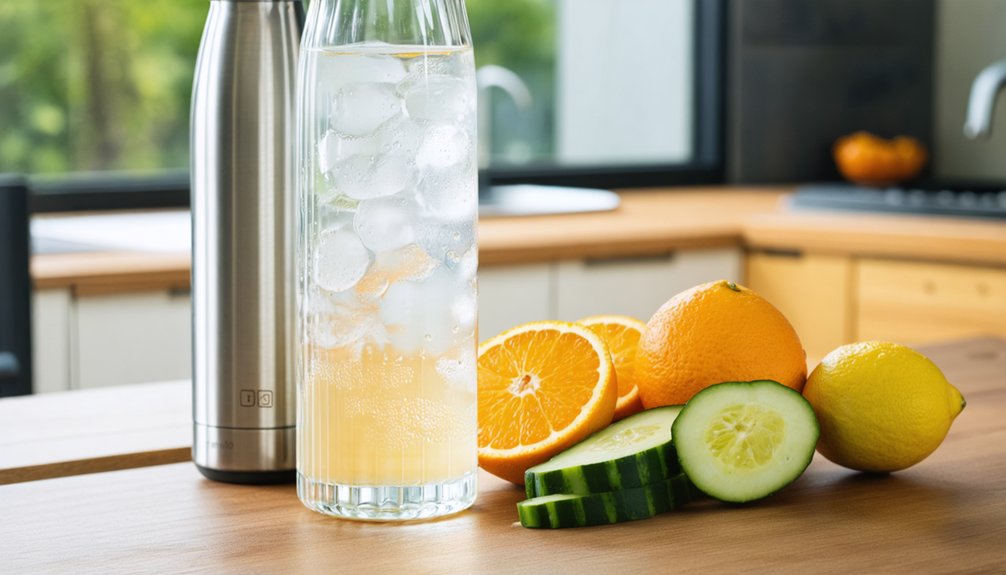

Staying hydrated without overdoing it involves knowing individual needs and listening to the body. Experts recommend daily intake of around 2.0 liters for men and 1.6 liters for women, including water-rich foods. Regularly consume fluids, especially during physical activity or hot weather, while monitoring urine color as a hydration indicator. It’s important to balance hydration with food intake to avoid excessive water. Exploring effective strategies can enhance overall hydration and well-being. Uncover more perspectives on optimizing hydration.
Highlights
- Aim for daily hydration goals: 13 cups for men and 9 cups for women, adjusting based on climate and activity level.
- Consume water-rich foods like fruits and vegetables, which can contribute to your overall hydration without excessive liquid intake.
- Stay alert for signs of hydration needs, as thirst alone may not be a reliable indicator of dehydration.
- Avoid treating caffeine as dehydrating; beverages like coffee and tea can help meet daily fluid intake goals.
- Monitor hydration levels, especially during exercise, by replacing fluid loss gradually to avoid the risk of overhydration.
Understanding Daily Water Intake Recommendations
Understanding daily water intake recommendations is essential for maintaining ideal hydration and overall health. Major health organizations provide various fluid guidelines. For instance, the National Academy of Medicine advises men to consume 13 cups (104 ounces) and women 9 cups (72 ounces) daily.
The Mayo Clinic suggests slightly higher amounts, recommending 15.5 cups for men and 11.5 cups for women. Notably, these totals encompass all fluid sources, including food moisture. Around 20% of daily water intake often comes from foods. It’s important to recognize that plain water needs may vary depending on other fluid consumption. Additionally, higher amounts may be required for individuals who are physically active or exposed to warm climates. The average daily water for men is about 15.5 cups emphasizing the importance of meeting hydration needs. Therefore, keeping the government recommendations of 6 to 8 cups of fluid a day in mind can greatly aid in achieving optimal hydration.
Ultimately, understanding these water intake recommendations helps individuals promote a healthier lifestyle while nurturing their sense of community and belonging.
Factors Influencing Your Hydration Needs
Daily water intake recommendations serve as a foundation for individuals to gauge their hydration needs. Several factors influence these requirements, including climate variations and genetic factors. For instance, hot or humid climates accelerate fluid loss, necessitating increased intake, while high altitude can raise dehydration risk. Age also plays a vital role; children require more hydration due to their higher surface area-to-body mass ratio, while elderly individuals often experience decreased thirst sensation. Gender differences yield distinct needs, with men generally requiring more fluid than women. Additionally, physical activity intensity substantially increases fluid loss through sweat, making proper pre-, during, and post-exercise hydration essential. Water consumption patterns are influenced by the total daily water intake and factors such as social and environmental contexts. Hydration status is assessed using various methods, which helps to promote a more personalized approach to hydration for peak health and well-being. Water is essential for life and maintaining proper fluid intake is critical for optimal health. Drinking water regularly throughout the day helps prevent dehydration risks that can lead to energy drain and tiredness. Additionally, staying well-hydrated is important for preventing infections, which can impact overall health.
Common Myths About Hydration
While many people believe common hydration myths, such misconceptions can lead to inadequate or excessive fluid intake, ultimately impacting health. To debunk myths, it’s important to recognize that the often-cited “eight glasses a day” rule lacks scientific backing, as individual hydration needs vary. The belief that thirst reliably indicates hydration is misleading; dehydration can occur before thirst kicks in, making urine color a better indicator. Additionally, the concern over overhydration must not be overlooked, as excessive water can lead to serious conditions like hyponatremia, a life-threatening condition resulting from over-hydrating. Finally, caffeinated beverages do not inherently cause dehydration and can contribute to fluid intake. Average adults in temperate climates typically find that plain water suffices for hydration, highlighting the importance of understanding individual needs. Proper hydration improves health over the long-term, making it essential for a child’s health as well; understanding their hydration needs can promote healthier choices for everyone seeking to achieve ideal hydration. Older adults are especially vulnerable to dehydration due to fluid levels that can drop before thirst is felt.
Different Sources of Daily Hydration
Hydration can be achieved through a variety of sources, each contributing to the body’s overall water intake. Approximately 80 percent of daily hydration comes from beverages, with plain water being a key player, constituting 30 percent of water intake for men and 34 percent for women. Total water intake increases with physical activity level for both men and women, highlighting the importance of staying active for optimal hydration. It is important to recognize that plain water consumption varies significantly among different demographic and socioeconomic groups. Caffeinated drinks like coffee and tea also promote hydration without net fluid loss. In addition to drinks, solid foods, particularly fruits and vegetables such as watermelon and cucumbers, contribute substantially to hydration, accounting for about 20 percent of daily intake. Notably, 20–30% of total daily water intake in Europe comes from food, further emphasizing the importance of a balanced diet. With developing beverage trends, milk and juices offer substantial hydration options. Recognizing these diverse water sources promotes a sense of belonging in a community invested in staying healthily hydrated.
Current Hydration Habits Among Americans
An alarming trend in hydration habits has emerged among Americans, revealing a significant portion of the population operating at a suboptimal level of hydration. Approximately 75% of people may be experiencing dehydration, often without recognizing the symptoms. Daily water loss—about 8 to 12 cups—compounds this issue, as busy lifestyles lead many to neglect replenishing fluids. However, there’s a shift happening: a 7% increase in hydration resolutions, particularly among younger demographics, suggests growing dehydration awareness. Additionally, hydration technology is enabling personalized tracking methods, promoting a proactive approach to fluid intake. As health consciousness evolves, the challenge remains for individuals to adopt consistent hydration habits that respect their unique needs while embracing a community-focused viewpoint on wellness. This shift aligns with the fact that 69% of Americans resolve to get more sleep, highlighting the interconnectedness of hydration and overall health. Moreover, even mild dehydration can impair executive function, underscoring the importance of maintaining adequate fluid intake in daily routines. A significant portion of the population experiences mild chronic dehydration, making it crucial for individuals to prioritize their hydration needs effectively.
Benefits of Staying Hydrated
Neglecting hydration can have significant consequences, but recognizing the benefits of staying hydrated can motivate individuals to make informed choices.
Hydration benefits include enhanced physical performance, improved cognitive function, and better overall health.
Athletes experience a 6–10% water loss during intense exercise, which can impair performance, while adequate hydration supports muscle tissue and reduces oxidative stress.
Additionally, ideal water intake can enhance concentration and memory, with studies showing improved attention after consuming water.
Hydration also plays a crucial role in organ health, reducing risks of kidney stones and urinary tract infections.
Adjusting Hydration for Physical Activity
During physical activity, adjusting hydration strategies is crucial for optimizing performance and maintaining overall health. Proper exercise hydration begins well before activity, with recommendations to consume 500-600 ml of water or sports fluids 2-3 hours prior. An additional 200-300 ml should be ingested 10-20 minutes before starting.
During exercise, it is important to drink 4-8 ounces every 15-20 minutes, increasing to 8 ounces if exercising in heat. Post-exercise, athletes should replace fluid loss at a rate of approximately 24 ounces for every pound lost. Individual factors such as sweat rate and the exercise environment dictate specific needs. Monitoring hydration status through urine color and body weight can further help guarantee peak hydration levels for enhanced performance.
Hydration Tips for Older Adults
Maintaining proper hydration is essential for older adults, as their bodies undergo physiological changes that increase the risk of dehydration.
Care planning for senior health should prioritize hydration strategies.
The National Academy of Medicine recommends approximately 2.0 liters for men and 1.6 liters for women daily, considering food sources contribute 20% to hydration needs.
Incorporating water-rich foods like fruits, vegetables, and soups can enhance fluid intake without over-reliance on beverages.
Increasing visibility of water containers in living spaces, scheduling regular drinking intervals, and marking containers with time indicators can support consistent hydration.
Additionally, monitoring urine color offers a simple way to gauge hydration status.
These strategies promote well-being and prevent dehydration, nurturing a sense of community among older adults.
Recognizing Thirst and Hydration Signals
Recognizing the signals of thirst and hydration is vital for overall well-being, particularly among older adults who may experience diminished thirst sensation, and is essential. The body’s thirst mechanisms involve complex physiological processes, including the monitoring of plasma osmolality and blood sodium levels.
Early dehydration signs often manifest as a dry mouth, making awareness paramount. Subtle neuronal activities precede conscious thirst, indicating hydration needs. Neural pathways communicate dehydration signals, with the subfornical organ playing a key role in relaying this information.
Factors like age and electrolyte imbalances can weaken these signals, leading to the risk of dehydration. Staying attuned to these cues promotes a healthier lifestyle and enhances the sense of belonging within communities that prioritize collective well-being.
Balancing Hydration With Food Intake
Balancing hydration with food intake is a crucial aspect of achieving ideal health and wellness.
The body receives about 20% of its daily fluid intake from food, particularly water-rich fruits and vegetables.
Foods like cucumbers, lettuce, and watermelon consist of over 90% water, making them excellent hydration strategies.
Integrating these high-water-content foods into meals promotes effective food pairing, as they not only hydrate but also provide essential nutrients.
Soups, yogurt, and cottage cheese serve as additional fluid sources that enhance overall hydration.
References
- https://en.wikipedia.org/wiki/Daily_consumption_of_drinking_water
- https://civicscience.com/forty-seven-percent-of-americans-dont-drink-enough-water-plus-more-h2o-insights/
- https://www.cdc.gov/nchs/products/databriefs/db242.htm
- https://www.cdc.gov/nutrition/php/data-research/fast-facts-water-consumption.html
- https://ketteringhealth.org/youre-probably-not-drinking-enough-water/
- https://www.health.harvard.edu/staying-healthy/how-much-water-should-you-drink
- https://pmc.ncbi.nlm.nih.gov/articles/PMC4473081/
- https://www.nhs.uk/live-well/eat-well/food-guidelines-and-food-labels/water-drinks-nutrition/
- https://www.betterhealth.vic.gov.au/health/healthyliving/water-a-vital-nutrient
- https://nutritionsource.hsph.harvard.edu/water/